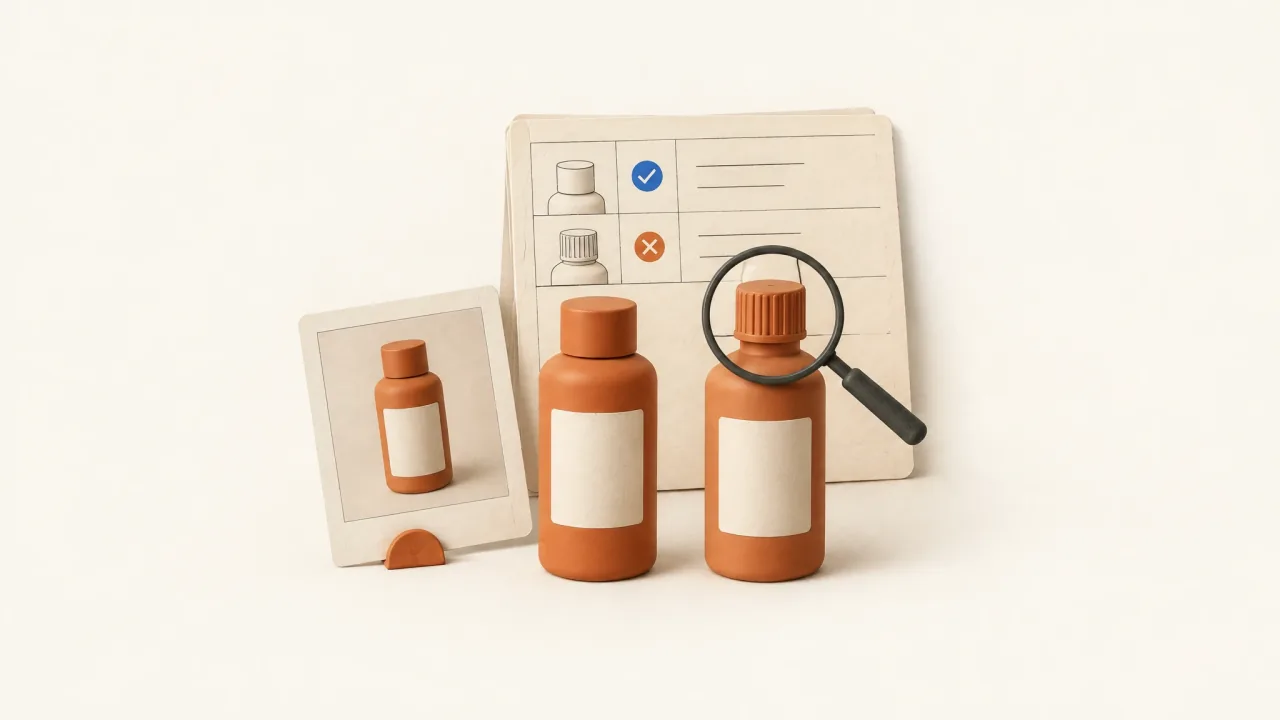
Compare the ad with the approved product references, even if the scene looks convincing. A polished bottle with the wrong cap is still the wrong bottle. A readable invented label is not an acceptable substitute for the supplied packaging.
Keep a product identity defect ledger. For each mismatch, record where it appears, the reference that establishes the requirement, its effect on the depiction, and what would count as a correction. That gives you something specific to request when “the product looks off”.
The worked entries below are illustrations. They don't report findings from returned Fablo footage; the existing-product demonstration media and any genuine correction still need to be recorded. Use this method to inspect production quality. It can't predict campaign effectiveness.
Establish the identity authority before watching
Choose the exact SKU or variant the ad should show. Supply approved product images, current packaging, and the wording for visible brand text. If those sources disagree about the real object, a generated approximation can't settle it.
Write a short identity contract. For a hypothetical packaged bottle, it might name the container shape, cap type, colour variant, front-label arrangement, exact product name, and any included accessory. Mark which text must be readable for this particular scene. Do not require every line of fine print to be legible in a distant shot, but do not accept invented wording where the camera makes it visible. The proposed product-launch showcase offers a reference-led planning approach for a multi-scene product commercial; use its checks as briefing prompts, not evidence of guaranteed fidelity.
Keep identity requirements separate from product claims. Accurate packaging doesn't substantiate claims about its contents. Resolve conflicting references before diagnosing the render; the reference-pack guide covers preparing those inputs.
The references must agree first
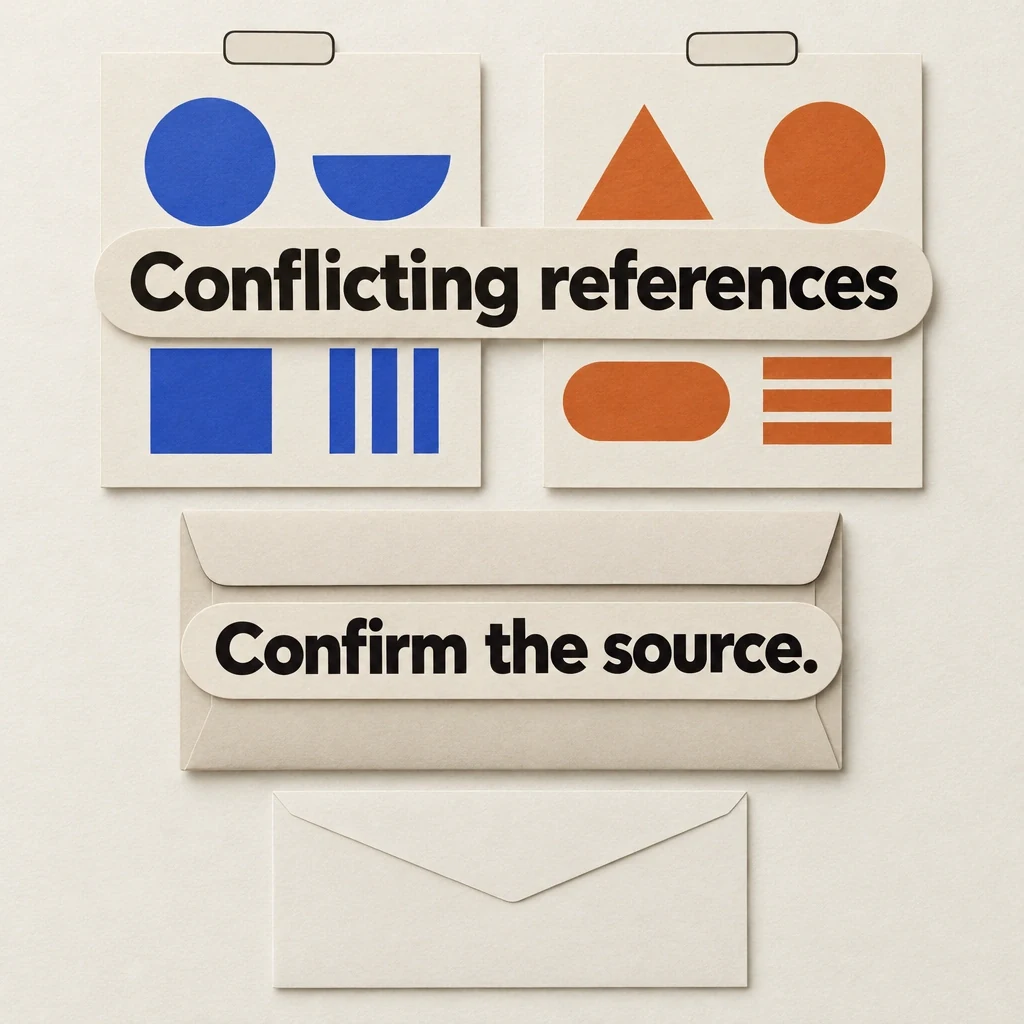
Conflicting inputs need a source decision before a candidate can be judged against them. A convincing render cannot settle which reference applies.
View full-size (opens in a new tab)Image explanation
- Establish the exact SKU or variant, current packaging, approved artwork and wording, including the scene's readable-text requirements.
- If supplied references disagree, ask the responsible owner to resolve which governs before diagnosing a mismatch. Correct packaging still leaves any claim about the contents needing its own evidence.
- The coloured tokens represent no real product variants and choose no correct source. This preparation diagram contains no findings from inspected footage.
Inspect identity at three viewing levels
Watch the complete ad first. Can you recognize the intended product wherever the story depends on it? Does the final close-up show a different variant from the demonstration? Note scenes to inspect more closely, but let the first playback run.
Compare clear frames with the references. Check silhouette, part count, proportions, colours, accessories, logo, and packaging wording. Record the timestamp in the actual file and save the frame you inspected. The planned shot description can't tell you what appeared in the export.
Play through the transitions as well. An object may look correct at rest and change shape during a turn. Follow the cap, label edges, distinctive seams, and other recognizable details through movement and cuts. Check whether a change comes from perspective or from a part appearing or vanishing.
Review at the intended viewing size. A defect you can see only under heavy enlargement may need a different editorial priority from a wrong product name plainly visible on a phone. That affects which correction you address first; it doesn't change the product requirement.
The best frame is not the inspected interval
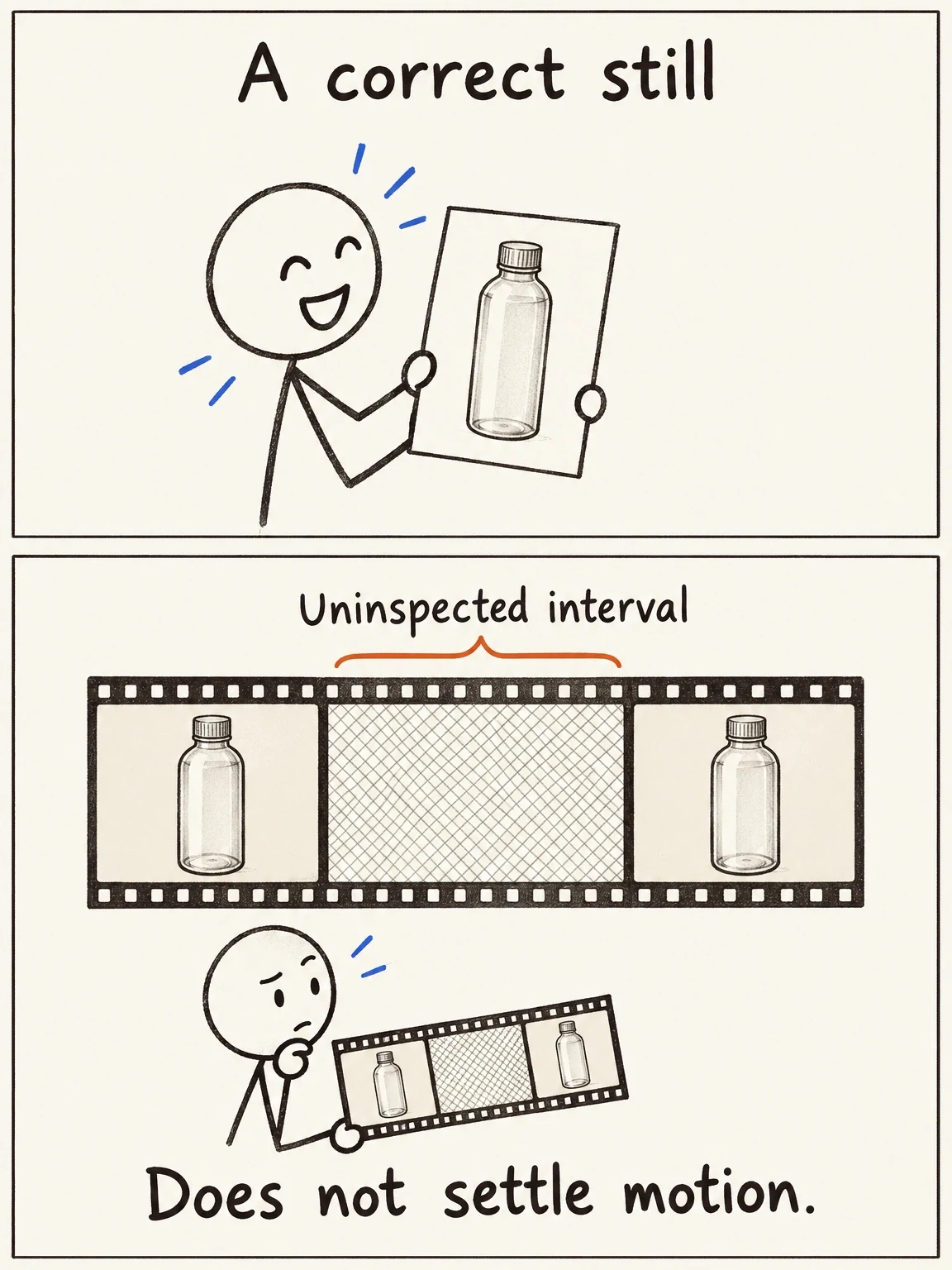
A correct still supports a finding about that frame. The product's movement and joins still need inspection.
View full-size (opens in a new tab)Image explanation
- A clear correct frame leaves identity throughout a turn or join unproven.
- Inspect the full ad, reference-matched frames and actual motion. Keep missing interval evidence unassessed rather than assuming the details stayed stable.
Classify the mismatch before choosing the remedy
Classify each issue so the correction targets the right problem:
- Variant substitution means a different size, colour, package revision, or accessory appears. Confirm the source references before requesting the correct variant.
- A geometry defect shows a cap, hinge, slot count, or proportions that conflict with the product. Name the part and show the reference that establishes its design.
- A brand or text defect changes lettering, replaces the logo, or puts an unsupported statement on the package. Supply approved artwork and wording.
- Temporal identity drift changes a recognizable detail within a shot or across adjoining scenes. Record the interval as well as the clearest frame.
- A visibility problem obscures, crops, or darkens the correct object so it can't explain its job. A framing correction may be enough.
If the bottle looks correct but the handling doesn't, log an interaction problem and use the product-in-hand checklist. A vague identity complaint may lead to new footage that leaves the contact defect in place.
Copy the product identity defect ledger
Create an entry for each distinct issue. If it appears repeatedly, list the locations in the same entry. Give unrelated defects separate decisions.
Candidate and export version: [exact video under review]
Product authority: [SKU/variant and approved reference revision]
Scene and actual location: [timestamp/interval; attached frame]
Required identity detail: [specific feature or approved wording]
Reference evidence: [view/artwork/specification that establishes it]
Observed depiction: [what is actually visible, without a theory]
Category: [variant / geometry / brand-text / drift / visibility]
Consequence: [wrong product, misleading detail, unclear view, etc.]
Decision: [hold for correction / preference / cannot assess]
Requested correction: [bounded change and material to preserve]
Acceptance condition: [observable requirement in the new export]
Recheck: [actual revised version, locations, finding, reviewer]
Status: [open / corrected and checked / unresolved]
Use “Cannot assess” when the view doesn't let you check a detail. A covered label won't tell you whether its wording is correct. Obtain a clearer view or record that you couldn't inspect it.
Worked entries: identity versus visibility
Illustrative identity entry: suppose an approved bottle has a plain screw cap, but a generated product close-up shows a pump. The finding would be “pump assembly visible instead of the supplied screw cap,” supported by the approved product photograph. Hold that candidate and use the one-scene revision brief to request the correct cap while retaining the accepted framing and message where possible. Acceptance requires the correct cap throughout the relevant shot, not only in its poster.
Illustrative visibility entry: suppose the correct bottle is present, but a hand covers the product name during the only identification shot. Do not claim that the label was misspelled. Request a clearer orientation or a separate identification view, then check whether the name can actually be read at delivery size.
Neither example describes a Fablo failure or successful repair. A published before-and-after account needs the actual files, observations, and correction record.
Wrong part and hidden detail are different problems
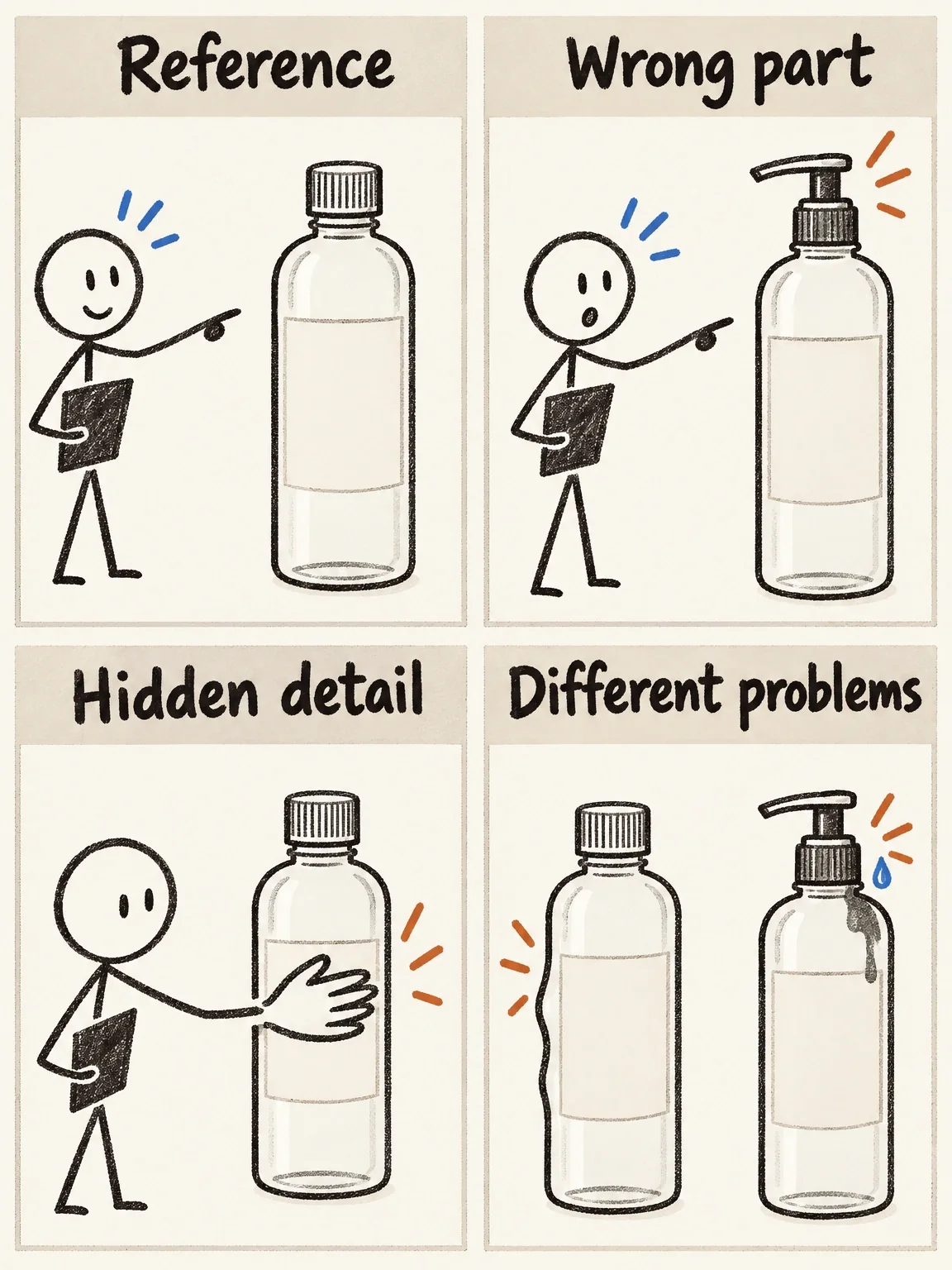
In these hypothetical bottle examples, the wrong closure and a hidden label need different findings and correction requests.
View full-size (opens in a new tab)Image explanation
- Replacing the supplied screw cap with a pump is an identity defect in this hypothetical example.
- A covered label needs a visibility correction. Until it can be read, its wording could be correct or misspelled.
Recheck the complete corrected candidate
A replacement close-up can fix one detail and introduce another. Compare it with the ledger and check how it joins the surrounding ad. Look for the same variant, coherent scale, correct speech and captions, approved offer, and unchanged destination. Keep the earlier candidate clearly labelled so the reviewer compares the right versions.
Record what passed, what's unresolved, and what you couldn't assess. Make the human selection after inspection. References don't guarantee identity or continuity.
For a new production, follow the product-ad workflow. Bring the actual references and identity contract, then open Fablo to produce a product-ad candidate you can inspect. Fablo's monthly plans provide recurring credits for production and corrections. Agree on the scope and estimate first, and use the ledger to decide whether to accept the returned candidate.