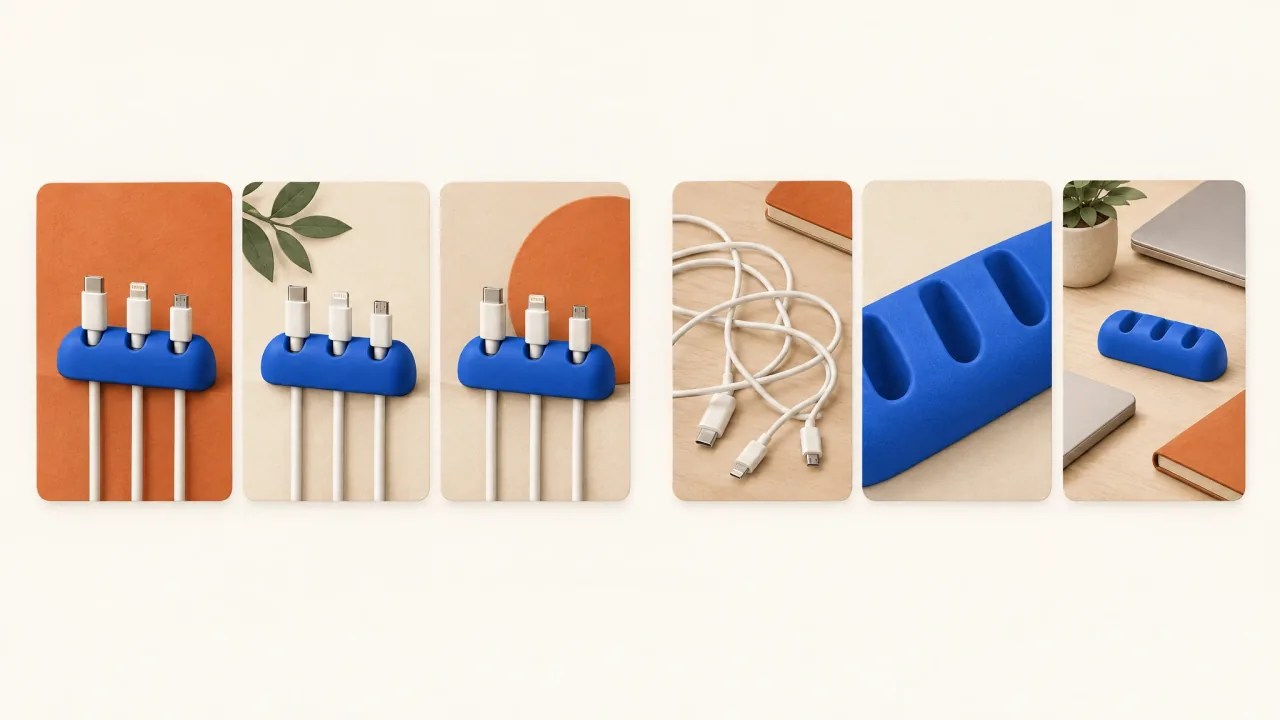
Six videos can still say the same thing. To make the set useful, decide what should change in the message and what you want to learn from the difference.
Use Fablo to develop another direction from the same product facts. Name the variable you want to change before asking for more videos.
The examples here are written plans. They don't show a produced concept set or a completed hook test with the video body kept unchanged.
Decide which kind of variation you need
An angle gives someone a different reason to care. Demonstrating a mechanism and answering an objection address different buying questions.
A hook changes the opening into a specified video body. Keep that body stable when you want to test the opening.
A treatment changes the look or delivery of the same message. Clay, a presenter, and cinematic scale are treatment choices; they don't establish different audience motivations.
A format changes the aspect ratio, duration, or adaptation for a platform. A useful crop can keep the same concept.
Keep the factual brief stable
Use the same approved product identity, claims, and actual offer in every direction unless your brief explicitly changes them. Keep the references and mark the details that must stay.
The illustrative cable-keeper slate keeps the product fixed and explores retrieval frustration, mechanism clarity, an objection, ritual, a multi-device use case, and organized-desk identity. These are proposed buying reasons. They haven't been established by customer research, produced ads, or campaign results.
Work through the angle examples
Brief a set you can inspect
Use this factual product brief and supplied references: [inputs].
Variation type: [angle/hook/treatment/format].
Keep fixed: [facts, offer, identity, body or other elements].
Change: [specific hypothesis or production variable].
For each direction, state the intended viewer situation and message.
Actual action/destination: [approved action/URL].
Output requirements: [format/runtime/deliverables].
Return separate identified candidates and their final scripts.
Accept concepts by their intended job
Watch each output to see whether it expresses the difference you requested. Check that the product is recognizable, the message is clear, the audio and captions work, and the format is correct.
A scene can look different while giving viewers the same reason to buy. Record that when it happens. Decide whether the creative meets the brief, then use actual campaign evidence to inform the next one.