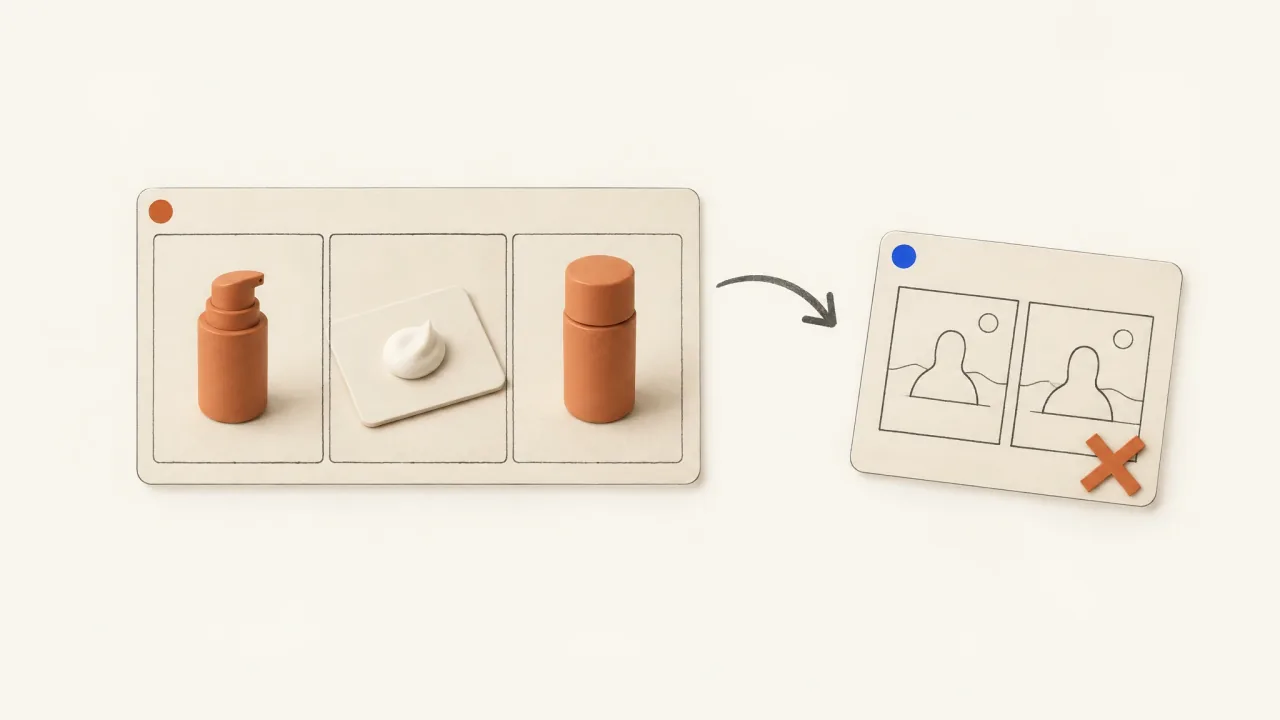
Start by identifying the result a proposed before-and-after ad implies. Then storyboard an approved product action your source material can support: what the product is, how it's handled, or where it fits in a routine. Remove the unsupported transformation from both the pictures and the words.
Use a claim-to-evidence replacement card to brief the product-action video. It gives production a specific task and the campaign owner a clearer creative to assess against current Meta policy.
Identify the claim before deciding whether to replace it
The answer to “Are before-and-after ads allowed?” depends on the product category and execution. Meta's current Health and Wellness policy permits some before-and-after depictions while restricting appearance-shaming and particular claims.
The personal-attributes policy separately restricts assertions or implications about the viewer's personal attributes, including physical or mental health. A line such as “Your skin needs fixing” raises that issue in a way a neutral product description doesn't.
Review the whole scene, even if you've replaced the verb “transform”. A distressed face, skin close-up, calendar jump, and suddenly altered complexion can communicate a result the script never states aloud. A word change alone won't resolve either policy question.
Write the implied claim in plain English: “This edit suggests that using the balm produces visibly calmer skin overnight.” Ask what evidence supports that exact statement. Package photographs alone can't support the proposed result.
Choose an action your material can support
For skincare, use the texture-and-application shot map to plan the sources. It helps separate shots that need genuine material or handling footage from those that can use illustrative styling.
Choose a demonstration you have the material to support:
- Packaging: opening a lid, removing a seal, or identifying the product. Approved photographs can establish appearance; real footage can establish the actual opening action.
- Texture: showing material lifted or spread. Use genuine product footage when its consistency is part of the message.
- Application: depicting the supplied directions. The sequence should agree with the label, without turning ordinary handling into an efficacy claim.
- Routine: placing the product at an appropriate moment, such as beside a washcloth before cleansing. Context explains use without proving a later bodily outcome.
Make the action visually interesting with a close view of the lid opening, a gesture that connects to the next shot, and a recognizable package at the end. Use the product-demonstration shot list to decide what each shot needs to explain.
Worked example: replace a cleansing-balm transformation
For this exercise, use a fictional oat cleansing balm in an ivory tin, supplied with a wooden spatula. Assume the product owner provides current package artwork, genuine handling footage, and label directions. These inputs illustrate the brief; they aren't a real brand's production record.
The concept to reject begins with irritated-looking skin and ends with a smooth generated face under “Overnight transformation.” Neither face establishes what the balm does. Together, they ask viewers to infer an outcome the supplied material can't demonstrate.
Replace it with this sequence:
- Recognition: the closed tin on a bathroom shelf. Exact overlay: “Oat cleansing balm.”
- Action: supplied footage of the lid opening and the spatula lifting the actual balm. Exact overlay: “Open. Scoop.”
- Direction: an approved graphic summarizing the label's application instructions, using the owner's exact wording.
- Resolution: the tin and spatula together. Exact invitation: “See the product and directions.”
Brief the new story around “What is this, and how would I use it?” The supplied material can support that explanation. It can't answer “What will my skin look like tomorrow?”, so keep that promise out of the replacement.
If the explanation needs a graphic, use the collage-explainer workflow brief as a planning reference for combining product material and exact text.
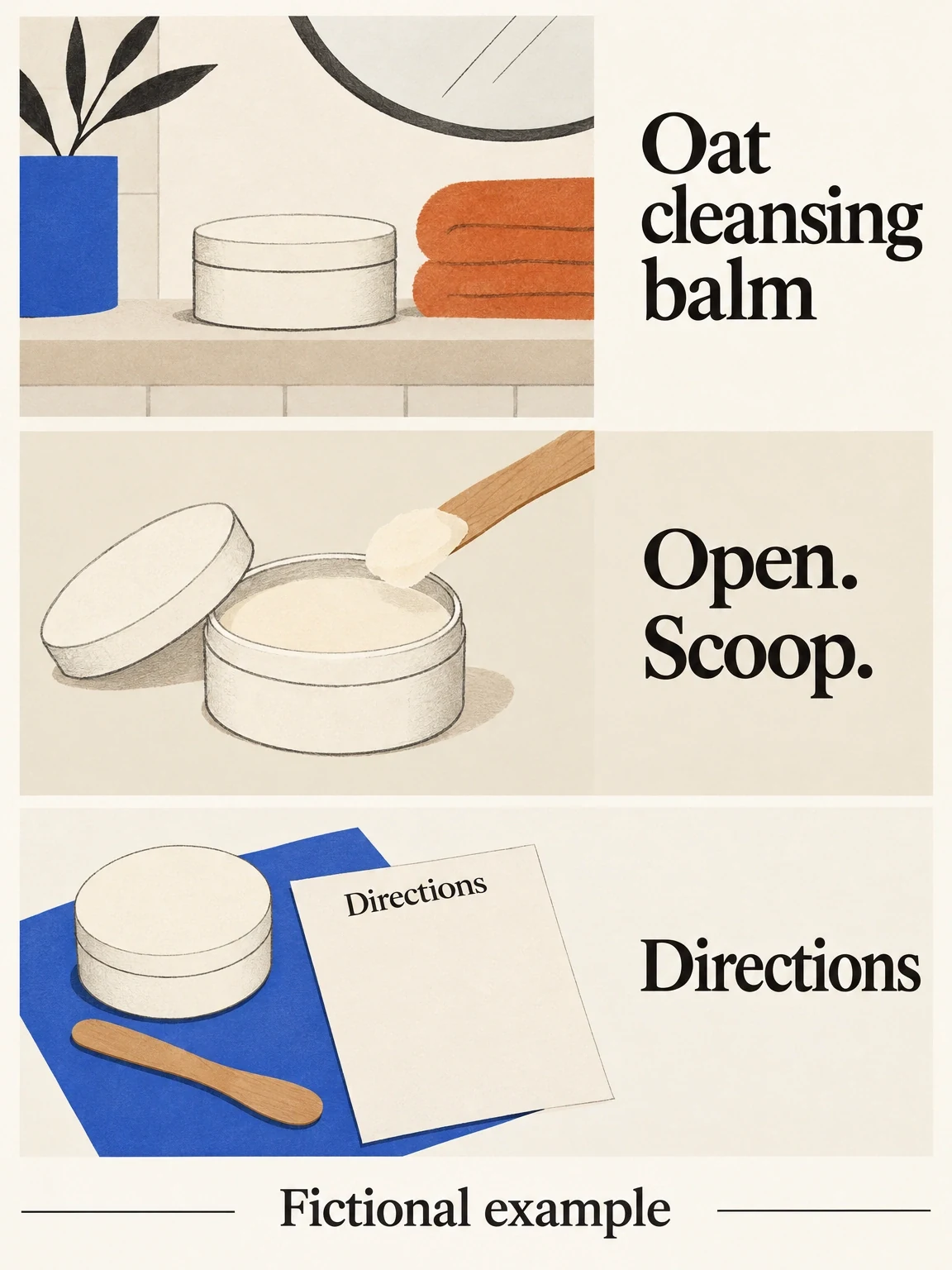
A product-action story instead of a skin result
This fictional oat-balm plan replaces a skin transformation with product recognition and supported handling. Genuine material and directions still need their sources.
View full-size (opens in a new tab)Image explanation
- Replace the unsupported generated skin transformation with product recognition and genuine supplied handling.
- Fill the directions placeholder with the owner's exact wording. The drawn balm supplies no real texture or efficacy evidence.
Copy the claim-to-evidence card into your request
Complete the first fields before asking for scenes, then use them to check that a dramatic ending hasn't brought the original promise back.
Create one finished product-action video for [exact product].
Original proposed transformation: [scene, wording, and implied result].
Evidence supplied for that result: [actual support, or none supplied].
Replacement question: [what the viewer should understand instead].
Approved product action: [one action supported by supplied material].
Source material: [package references, genuine footage, exact directions].
Illustrative scenes allowed: [context or graphics; identify their role].
Opening: [recognizable product and exact category wording].
Demonstration: [visible action and corresponding approved line].
Ending: [product view, approved invitation, actual destination].
Preserve: [product identity, source evidence, and exact artwork].
Exclude: [the original unsupported outcome and visual implications].
Delivery: [assembled video, intended destination, ratio, and runtime].
Explain the production plan and estimate before paid work begins.
Return the complete candidate for my review and final selection.
For the balm, the replacement question is “How is it handled?” Name the genuine handling footage in the evidence field; generated skin can't serve that role. Use the specific-script guide when a line promises more than its corresponding shot can show.
Review the complete edit for returning implications
Watch once without sound and check for implied skin changes. A cut can suggest a transformation even when the narration discusses a routine. Look at whether lighting makes the ending seem to show an improved complexion, or the application graphic introduces a result absent from the approved directions.
Compare the package, material, wording, and invitation with the inputs. Check the sequence as carefully as the tin: faithful packaging won't make a misleading edit accurate. The campaign owner still needs to review current policy separately from deciding whether the video fulfills the brief. This replacement doesn't guarantee approval.
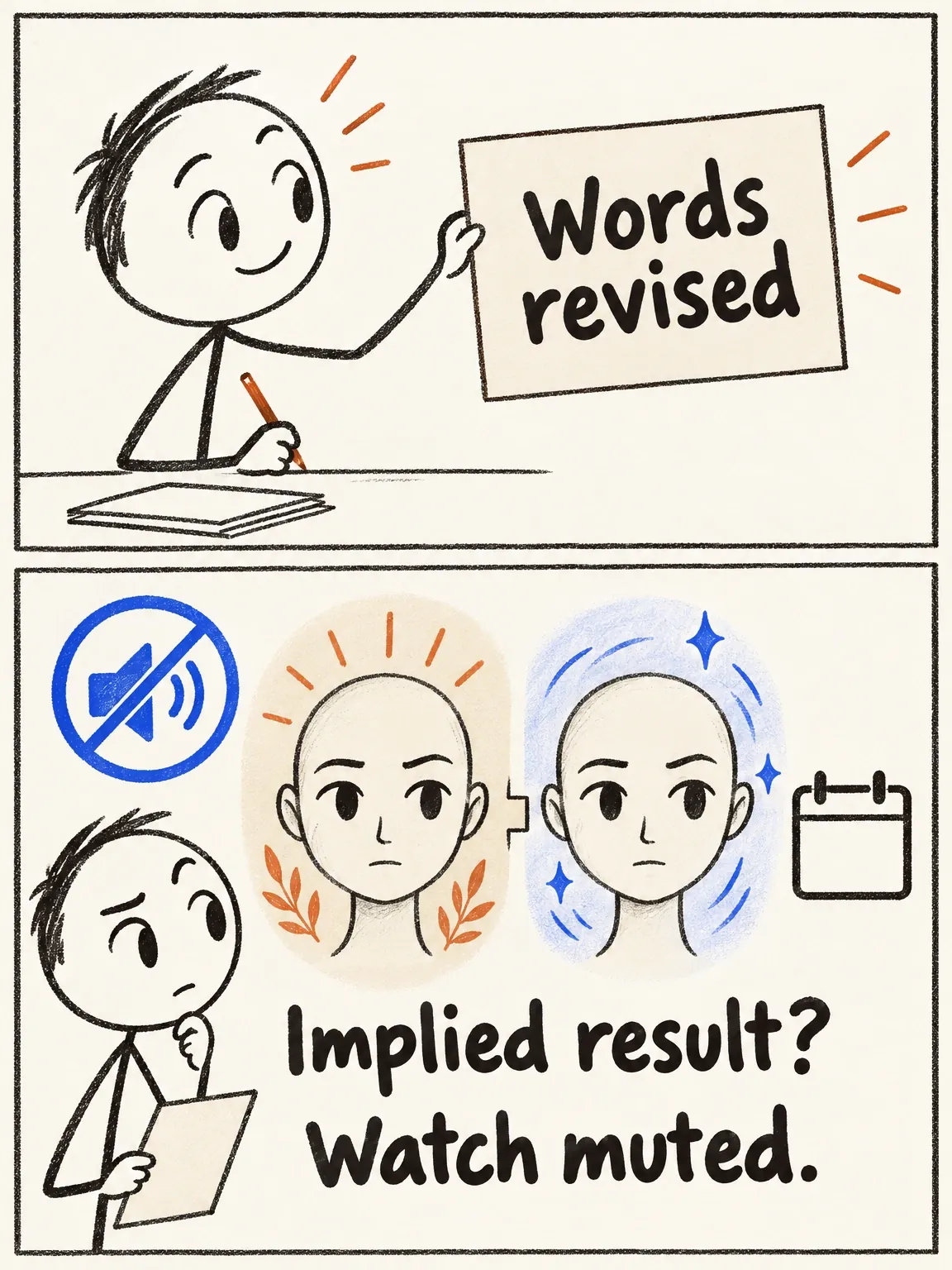
The picture did not get the copy memo
The words have changed, but the pictures may still imply a result. Review the complete edit without sound as well.
View full-size (opens in a new tab)Image explanation
- A cut, lighting change or application graphic can imply an unsupported outcome even after the narration is revised. Watch the complete edit muted to check.
- Compare packaging, genuine material, wording, approved directions and invitation with the supplied inputs. A faithful package leaves any misleading sequence unresolved.
- The identical drawn heads and blank calendar pose a review question without showing a skin change or efficacy. Keep current Meta policy review separate from production acceptance; an accurate candidate still has no guaranteed policy approval.
Bring one approved action into production
Take the card and source material into the product-ad workflow. Fablo plans and assembles the video through conversation, with evaluation and targeted correction before your final selection. Name the product action you need so production has a specific job to do instead of an unspecified transformation.
Open Fablo with your approved demonstration brief. For a continuing library of product and routine videos, review current plans and production credits and agree the scope and estimate for the next request.