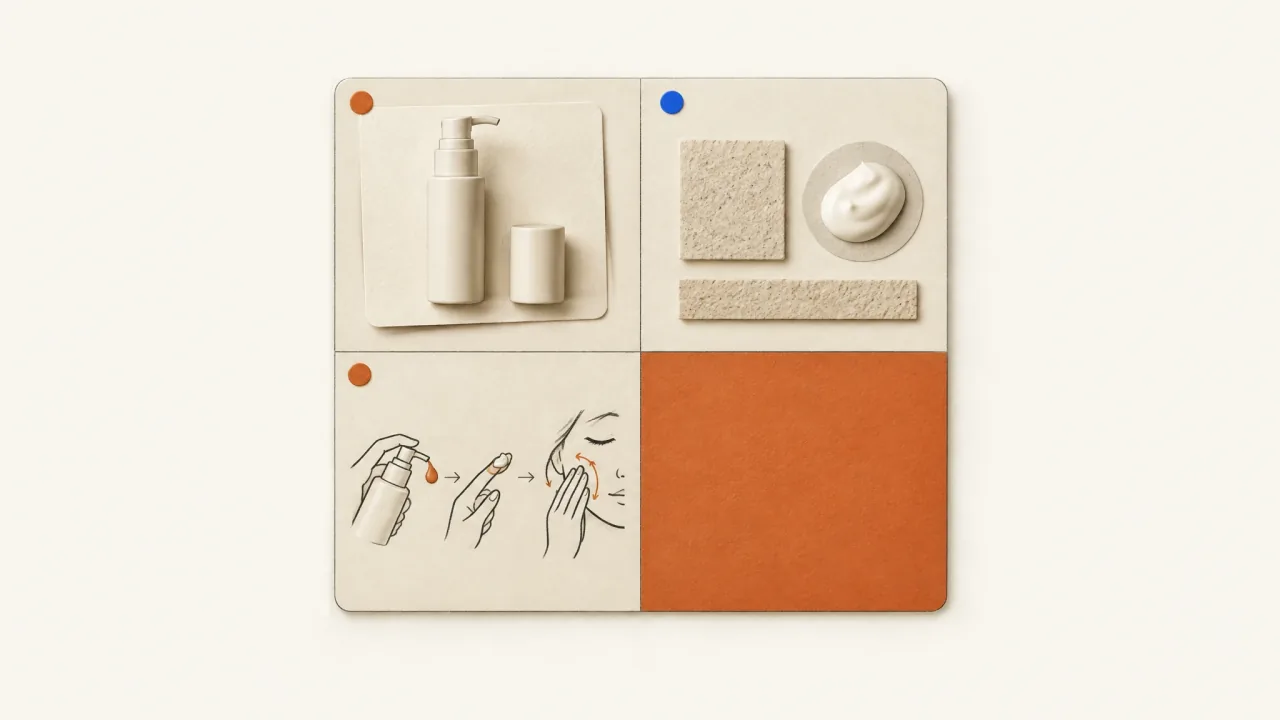
If viewers need to judge a skincare product's texture or application, use footage of the actual product. Generated imagery can add atmosphere or explain an approved idea. It can't establish the cream's consistency, absorption, or effect on skin.
Before you storyboard, map which shots need real sources and where illustration is allowed. Name the input for the dispenser, material, application, and pack ending. The team can then style the video while keeping anything the buyer is asked to inspect tied to the real product.
Separate visible handling from efficacy
Dispensing cream, spreading it, and showing the package demonstrate handling. “Absorbs instantly,” “reduces redness,” and “repairs the barrier” make claims about how the product performs. Even a convincing generated application can't support those claims.
Check what the edit suggests, too. A cut from cream on skin to unnaturally smooth skin can imply a result without a spoken promise. Keep lighting, visible texture, and the subject's skin appearance consistent. Don't make transformed skin the reward for applying the cream.
The FTC's substantiation policy, read October 8, 2026, addresses the need for a reasonable basis for objective express and implied claims before advertising them. Keep a separate record of approved claims and the evidence behind them. Footage that shows handling has a different job.
Ask for sources that show the material and contact
If the message includes colour or coverage, use the foundation shade-evidence guide too. You'll need references that answer those questions as well as texture; one kind doesn't establish the other.
Request the exact package variant, current label artwork, approved usage instructions, and clips of the actual product. A still photograph can show the pump's shape. To show how its contents dispense or spread, you need footage.
For texture, get a close recording under known lighting so the material can be inspected. For application, get footage of the approved use with the relevant contact visible. Keep the source context, including whether anyone has sped up or edited the sequence.
Ask what you can actually learn from the footage. Cream on a fingertip may show colour and a visible mound under the recording's conditions. It won't tell you about non-stickiness, absorption speed, fragrance, or suitability for every skin type.
Use the product-in-hand checklist to review contact and package handling. For skincare, also check that the depicted material and skin contact stay faithful to the source.
Give four shots distinct evidence jobs
Dispenser: show the actual pump, cap, or opening method using source footage when operation matters. Do not convert a pump press into a dosage instruction unless the approved instructions support that amount.
Material: show the genuine cream or serum closely enough to inspect the visible consistency. Do not replace it with a generated ribbon, gel bead, or liquid splash that changes the buyer's understanding of the formulation.
Application: use a genuine recording of the approved action. Preserve the subject's visible skin texture and the recorded movement. Do not accelerate the shot to manufacture “instant” absorption or erase residue to imply a finish the source did not show.
Pack ending: identify the exact product and deliver the approved invitation. A supplied pack photograph can provide this view without inventing label lettering. Decorative backgrounds may be illustrative, provided they do not change the package or suggest an unsupported scientific result.
You don't need four elaborate scenes. A clear recording of dispensing the material may answer two questions in one clip.
Each shot needs the right source
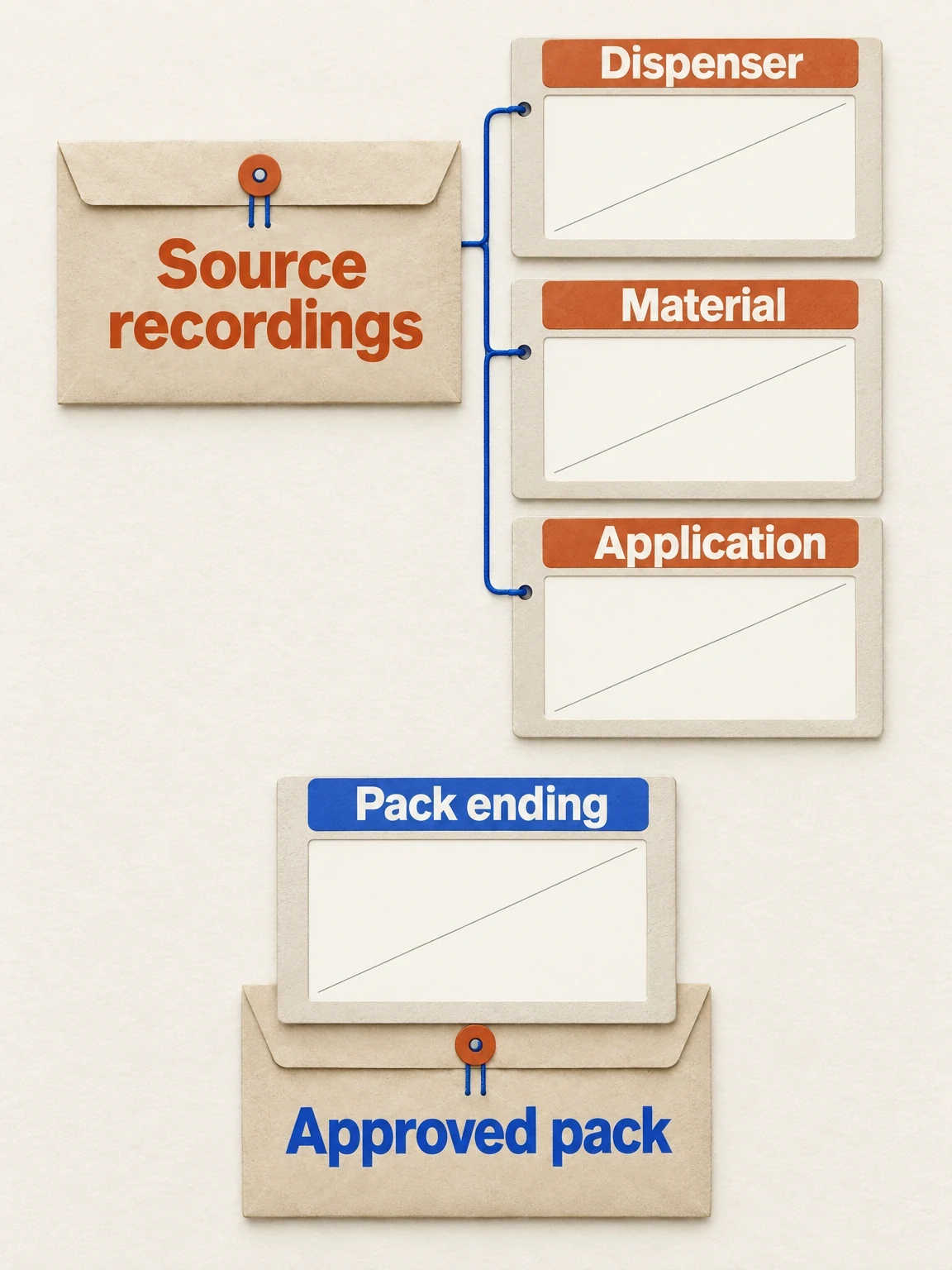
The empty holders reserve actual skincare sources for each shot job. A single genuine clip can cover more than one job when it shows the required material.
View full-size (opens in a new tab)Image explanation
- Dispenser operation, genuine material and approved application need task-matched recordings. A dispenser-and-material clip can cover two jobs; these roles prescribe no four-scene requirement.
- Preserve recorded colour, consistency, contact, pace and skin appearance. Keep claim evidence separate from handling footage. The ending can use the approved pack image, exact identification and invitation, with decoration outside the evidence.
- The blank holders supply no source files, texture, dosage, absorption or skin result. They contain a proposed plan rather than a completed skincare video or Fablo fidelity result.
Worked brief: a cream close-up, not a skin transformation
Imagine a brief for a fictional “Daily Cream”. Suppose the brand would supply a pack photograph, a pump-and-fingertip recording, and a separate approved cheek-application recording. Those are hypothetical source requirements for the exercise. No such files are supplied here, and they aren't evidence of a completed Fablo ad.
The proposed message is: “A closer look at texture and application.” It asks the viewer to inspect the product without promising an outcome. Identify the pack, show the recorded cream and approved application, then end with the brand's actual next action.
A warm paper background and subtle movement can add atmosphere to the pack ending. Keep genuine footage for the material close-up and preserve the recorded skin appearance during application. Don't switch to a generated face with softened pores.
If you only have the pack photograph, brief a packaging-led video. Request the missing texture and application recordings before adding shots that ask viewers to judge those qualities. A beautiful synthetic smear can't fill that gap or serve as a demonstration of the actual cream.
Use the specific script-line guide to keep narration tied to visible actions. The proposed product-launch brief includes external direction references for planning a coherent film. It doesn't establish skincare fidelity or show a finished Fablo example.
A pack image cannot fill a texture evidence gap
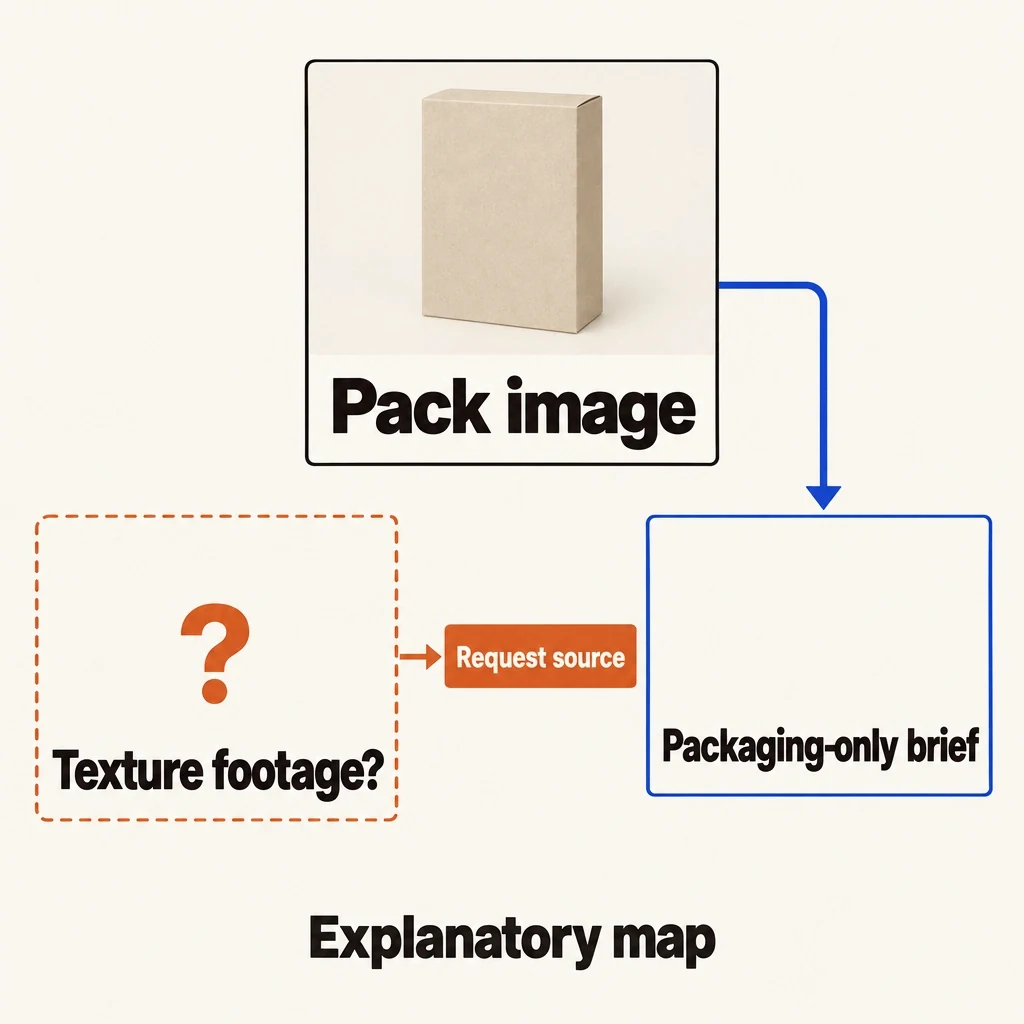
A skincare pack image leaves texture footage missing. Request genuine material or narrow the task to packaging.
View full-size (opens in a new tab)Image explanation
- A pack image supplies no genuine dispensing, texture or application footage.
- Request the actual source or narrow production to packaging only. Keep generated styling outside material that carries product claims; a generated smear cannot stand in for the real texture.
Copy the source-versus-illustration shot map
Use this as a customer request, filling the source fields with actual files before you authorize production.
Product: [exact skincare item, variant, current packaging]
Approved instructions and claims: [owner-approved facts and evidence]
Message: A closer look at texture and application.

Dispenser shot
Source: [actual operation recording]
Preserve: Package shape, dispenser, visible action; no invented dose.

Material shot
Source: [genuine close footage of this product]
Preserve: Recorded colour, consistency, motion, and viewing conditions.
Do not replace: Actual material with a generated texture illustration.

Application shot
Source: [approved-use recording; permissions and original context]
Preserve: Contact, pace, visible skin texture, and unaltered appearance.
Exclude: Skin transformation, fabricated absorption, efficacy imagery.

Pack ending
Source: [approved pack image or recording; exact copy]
Illustration allowed: [decorative setting, separate from product evidence]
Invitation: [actual approved action and destination]

Assembly: [ratio, target runtime, narration, captions, sound]
Missing sources: [omit affected shots or request the actual material]
Acceptance: Genuine evidence remains identifiable and faithful.
Inspect the joins as carefully as the close-ups
Watch the cuts between recorded footage and illustrative styling. Does the material suddenly change colour? Does an application cut make residue seem to disappear? Does beautification in the ending make the skin look transformed? Correct any misleading implication in the images as well as the narration.
Bring the map into the product-ad workflow and open Fablo to assemble a finished skincare video through chat. Review the plan, how the sources will be used, and the estimate before proceeding. Select the complete candidate only after checking it against the approved claims and genuine sources. For recurring demonstrations, check the current pricing information while planning the genuine footage and creative work each video needs.