
Approve one line, then try different deliveries. Compare a quiet take, a matter-of-fact take, and an animated take to see which makes the explanation easiest to understand. Keep the same claim across all three, without adding a fabricated personal story.
Here, “performance” means how the presenter delivers the line: emphasis, pauses, gaze, and gesture. You're choosing a natural, clear take for the video. That choice doesn't predict campaign results.
Decide who is speaking and what they can truthfully say
A human creator may explain, demonstrate, or speak as a genuine customer. A generated presenter can play an explanatory role, but has no actual purchase history or product experience to contribute.
Name the role in the brief. “Explain how the storage layout can change” gives the speaker a clear job. “Tell us how this changed your life” requires an authorized, truthful account; otherwise, you're asking for an invented experience.
The FTC's endorsement guidance, checked October 8, 2026, says endorsements must be honest and not misleading. Check the support for the claim separately from the delivery. A compelling performance can't substantiate what the speaker says.
For a genuine customer contribution, collect their actual account and agree on authorized wording first. Begin this take exercise once the words are approved.
Lock the words and identity before changing delivery
If the words aren't ready, the free UGC script generator can turn your supplied product facts into an editable draft. It uses transparent writing rules. Select and approve the lines before you direct the presenter.
Specify the exact line, product references, presenter identity, wardrobe, framing, and voice direction. Use the AI creative-brief template for the broader factual and delivery requirements, and the presenter continuity sheet to identify the visual and vocal details to keep consistent.
Keep those details consistent across the takes. If a version changes the speaker, camera distance, script, and pace, you can't explain all the differences by simply calling it “more animated.”
Some variation may be unavoidable in the footage you receive. Record it and decide whether the comparison is still useful. Check each direction against the actual take; it doesn't guarantee an identical performance with only one detail changed.
Translate three moods into playable directions
For this exercise, use IKEA's SKÅDIS product description, checked October 8, 2026. The page describes adding accessories and changing the storage arrangement. The proposed line is:
“Choose the accessories. Change the layout when your needs change.”
This sample line explains the product. It isn't an IKEA testimonial or a transcript from produced takes. Request the same presenter and product setting for all three deliveries.
Quiet: speak as though giving one person a practical suggestion. Keep the volume comfortable rather than whispering. Pause after “accessories,” then continue without a dramatic reveal. Maintain a relaxed gaze toward the viewer; let the hands rest.
Matter-of-fact: put clear emphasis on “choose” and “layout.” Finish each sentence cleanly. Briefly glance toward the pegboard between sentences, then return to the viewer. Use one small open-hand indication toward the product, without demonstrating an unplanned installation step.
Animated: add energy to “change the layout,” with a brighter expression and slightly livelier rhythm. Complete one restrained gesture before the final phrase. Keep every word audible; enthusiasm should not swallow “when your needs change.”
The directions name actions you can check in the take. “Make it authentic” leaves the producer to choose between changing the pause, expression, or wording. “Sound amazed that it works” can also imply a personal discovery the speaker hasn't made.
The creator-direction-board showcase brief collects proposed take-comparison ideas and credited external references. Use it to plan the work; it doesn't show these takes completed in Fablo.
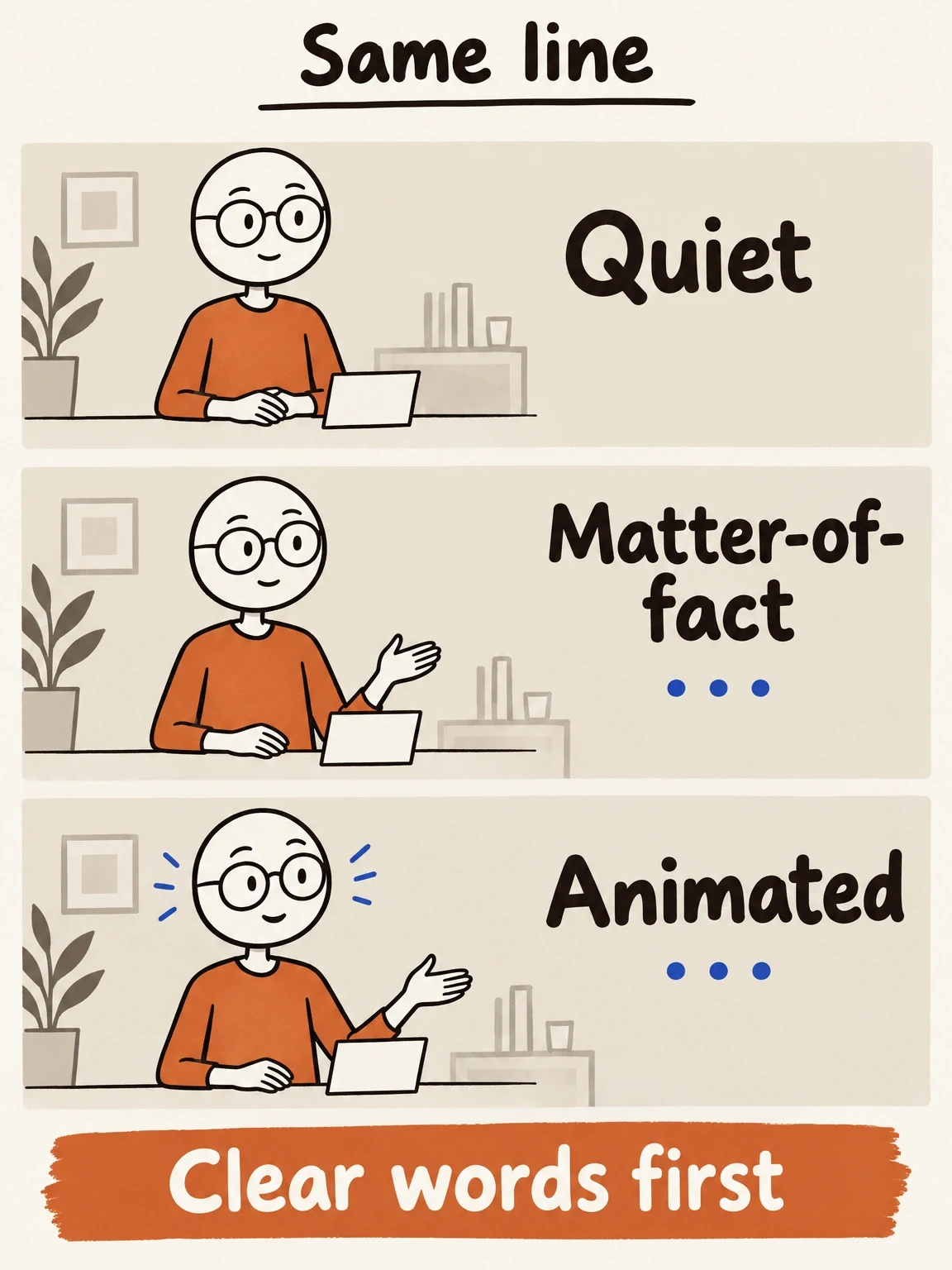
Direct the delivery, keep the words
Three delivery directions keep the approved line and presenter identity fixed. The liveliest take still needs to say the words clearly.
View full-size (opens in a new tab)Image explanation
- Request quiet, matter-of-fact and animated deliveries of the same approved explanatory line, with shared identity and framing.
- Check the actual words, qualifications, pronunciation and speech clarity before selecting a take. Delivery style supplies no testimonial experience, customer evidence or conversion proof.
Copy this take-direction card
Fill one shared card, then add a direction row for each take. Describe what the speaker does without giving them an unsupported experience.
PRESENTER TAKE CARD
Role: [explainer / demonstrator / authorized real customer]
Exact approved line: [unchanged wording]
Claim authority: [source; approval; any factual qualification]
Identity and framing to preserve: [reference versions and anchors]
Pronunciation to confirm: [names or terms]

Take A — quiet:
Emphasis: [words] | Pause: [location]
Gaze: [direction] | Gesture: [action or none]
Delivery: [specific speaking instruction]

Take B — matter-of-fact:
Emphasis: [words] | Pause: [location]
Gaze: [direction] | Gesture: [one bounded action]
Delivery: [specific speaking instruction]

Take C — animated:
Emphasis: [words] | Pause: [location]
Gaze: [direction] | Gesture: [action and completion point]
Delivery: [energy without changed meaning]

Selection gates: [accurate words; clear speech; coherent identity]
Preference question: [which delivery best explains the message?]
Observed departures: [actual differences after takes return]
Chosen take or exact correction: [human decision]
Select for clarity before choosing a favourite mood
Check the facts and technical quality first. Reject a take that adds words, mispronounces the product name, implies an unsupported result, or has distracting speech or visual defects. Even a charming expression can't rescue an incorrect line.
Compare the acceptable takes for how well they explain the message. Can you hear the qualification? Does the pause separate ideas naturally? Does the gaze guide attention without seeming disconnected? Does the gesture help with the product reference or compete with it?
Choose the take that answers those questions best for the intended video. Don't call it “the highest-converting creator.” This exercise includes no campaign comparison.
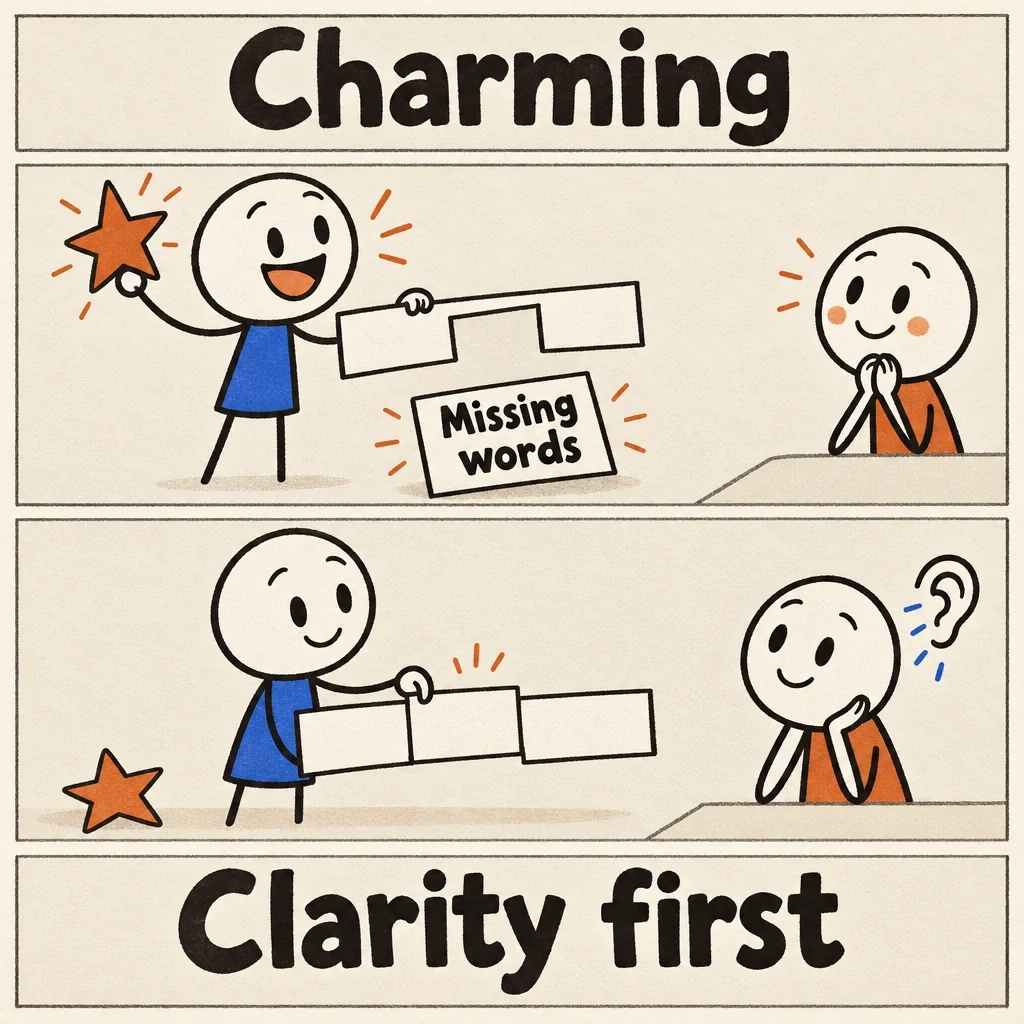
Charm cannot replace the missing words
The charming take still needs its words. Check accurate delivery and clear speech before choosing a presenter mood.
View full-size (opens in a new tab)Image explanation
- Use accurate words, clear speech and coherent identity as selection gates. Reject or correct a take that drops a qualification, changes the approved line, mispronounces the name or adds unsupported meaning.
- Then compare acceptable takes for explanatory fit, including pauses, gaze and limited gestures. Mood preference supplies no conversion evidence.
- The dropped paper illustrates a constructed problem, with no actual spoken error, transcript or produced IKEA take. This exercise identifies no highest-converting creator, genuine customer experience or campaign comparison.
Give feedback another take can use
Say, “Keep the matter-of-fact delivery. Hold the pause after the first sentence slightly longer, and finish the hand gesture before the final phrase.” The next take has a specific correction to follow while keeping the approved message.
Bring the card into the product-ad workflow. Fablo can assemble the selected delivery with product material, then check the video and make targeted corrections before your final selection.
To direct your own line, open Fablo with the approved script and take card. For an ongoing presenter series, define the number and scope of takes you want, then review current plans.