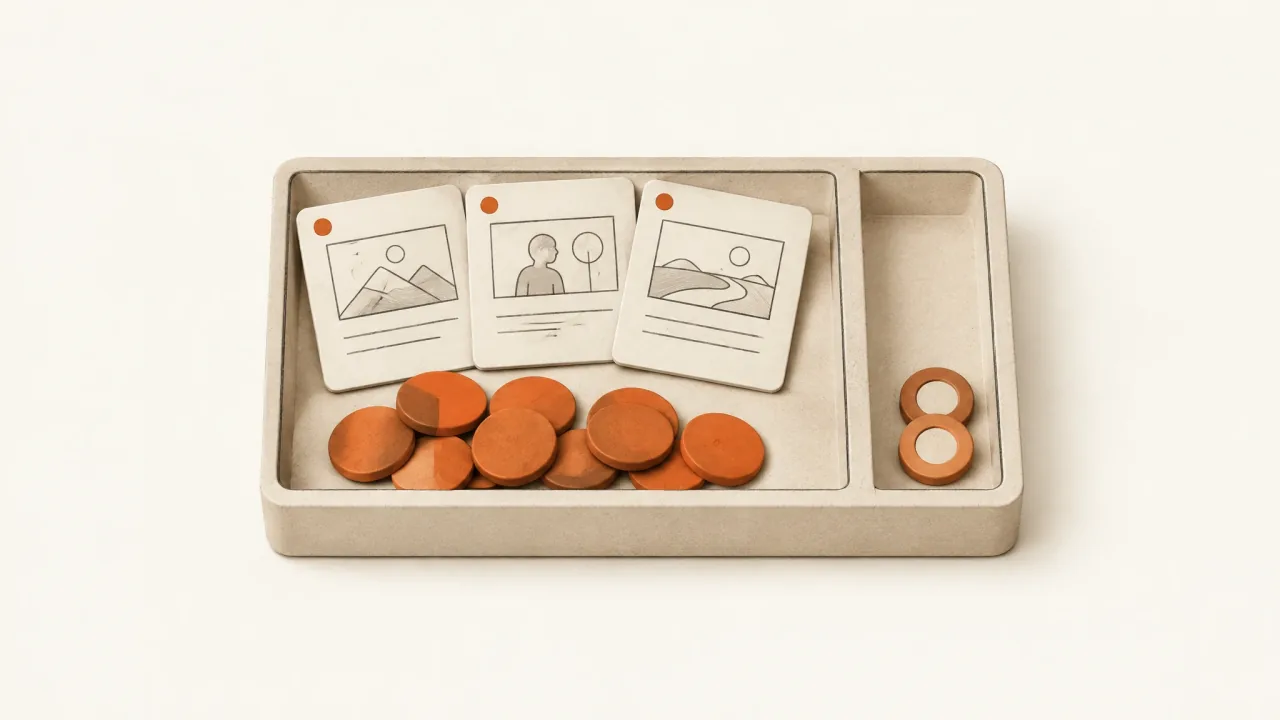
Define the work you're authorizing: which question it serves, what changes, what stays fixed, and when production must pause for your next decision. Set that scope alongside the balance or spending ceiling.
Use a scope-and-budget decision sheet to connect the deliverables to the current estimate, correction headroom, and reviewer capacity. Record authorization separately from charged usage so you can later calculate costs from what actually happened.
Spend the scope on an unresolved creative question
Suppose you have a mechanism-led product ad with an accurate, understandable demonstration and need two alternative entrances into it. Changing presenters, settings, and endings too would make the job much larger and lose the original comparison.
Request the existing base ad plus two opening variants in one delivery format. Use the fixed-body hook specification to identify the source and shared join. If the base export is already suitable, the packet has three complete exports. Those files share a concept, so counting them as three new concepts or three productions from scratch would misdescribe the work.
If the underlying argument is weak, revise the concept before editing its openings. Use the production matrix to decide which unit of work your question needs.
Find the expensive unknown before expanding the packet
Estimate the unresolved production work. Reusing footage may still leave voice changes, transitions, assembly, checking, and corrections to pay for.
Review the proposed work for dependencies:
- Is the selected body actually available in a usable source version?
- Does the opening require new footage or only an edit of approved material?
- Does a presenter need to handle a recognizable product?
- Are exact packaging details central to the shot?
- Will a different opening change the spoken or visual handover?
- Is the requested ratio a straightforward export or a new composition?
Try an unresolved product interaction in a small representative task before commissioning a large family of variants. Treat it as a check of the production approach. Success and costs for later assets remain uncertain. Use the creative-variations workflow to separate the concept, opening, and treatment work in the estimate.
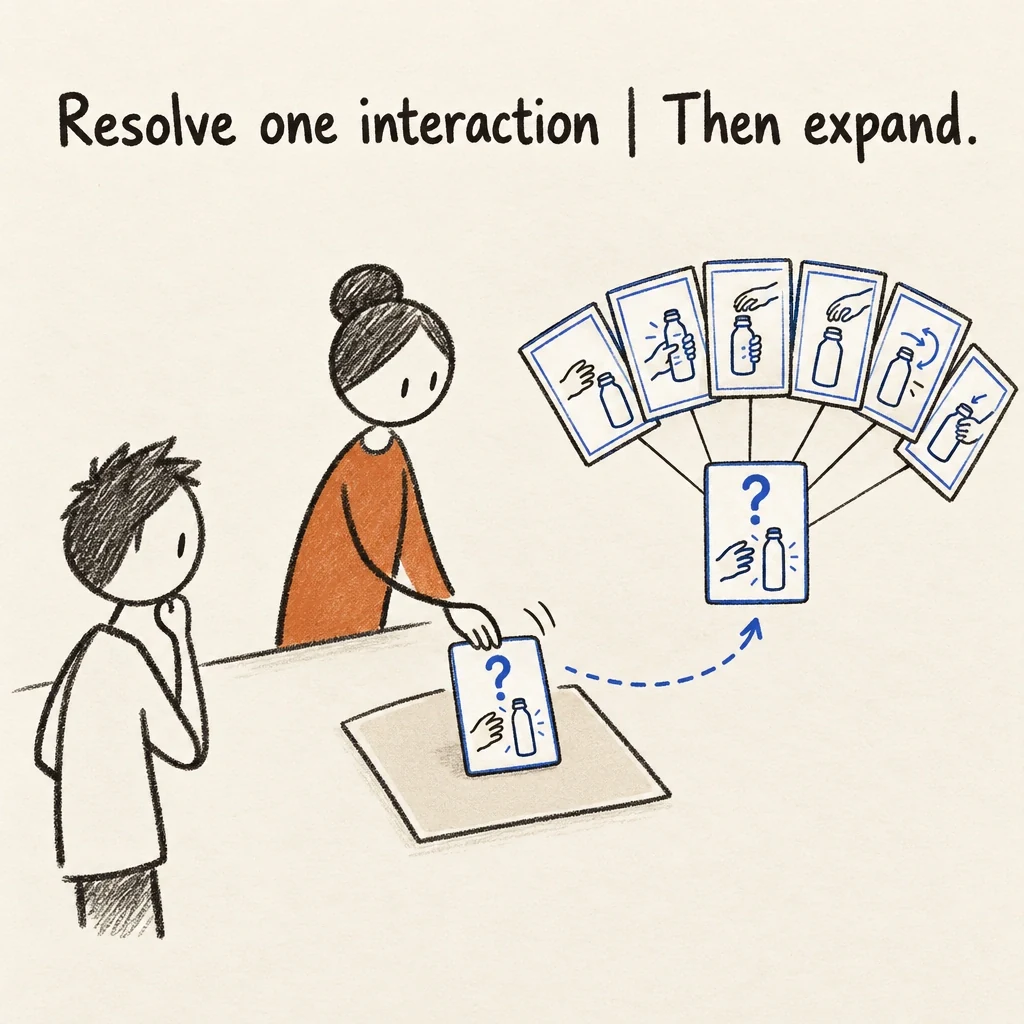
Resolve the difficult interaction before multiplying it
An unresolved interaction can travel into every dependent variant. Check a representative case before commissioning the family.
View full-size (opens in a new tab)Image explanation
- Give the unresolved representative interaction its own clearly scoped production decision before commissioning dependent variants.
- That first task checks the approach. Later shots still need inspection, and the complete cost remains to be established.
Copy the scope-and-budget decision sheet
Fill this sheet before authorizing paid production. Mark blank financial fields as “awaiting a current source,” so they're not read as zero.
Purpose and scope
- Creative question: [one message or opening question].
- Existing material: [approved body, references, audio, and their versions].
- Requested packet: [complete exports, not raw clip count].
- Changing elements: [specific scenes, speech, or treatment].
- Preserved elements: [demonstration, facts, offer, ending, destination].
- Delivery: [requested ratio, runtime, captions, and supporting files].
Authorization and evidence
- Current estimate: [dated quote or account estimate; covered operations].
- Media allowance: [amount and unit, supported by that estimate].
- Reasoning/chat treatment: [current billing source and allowance, if billed].
- Correction headroom: [included work and limits, or a separate allowance].
- Total project ceiling: [unit, covered categories, and approving person].
- External monetary costs: [licenses, editing, contractors; evidence or pending].
- Actual usage record: [where charged work and confirmed adjustments will be logged].
Decisions and capacity
- Review owner: [person who can accept or reject candidates].
- Pause conditions: [scope change, unresolved defect, exhausted allowance].
- Deferred work: [named extras requiring another authorization].
- Finish condition: [accepted exports and delivery checks].
- Operator capacity: [who briefs, reviews, and handles the handoff].
- Decision deadline: [when review is needed; not a promised render time].
Store the sheet with the brief. Add dated amendments for later changes and keep the original authorization.
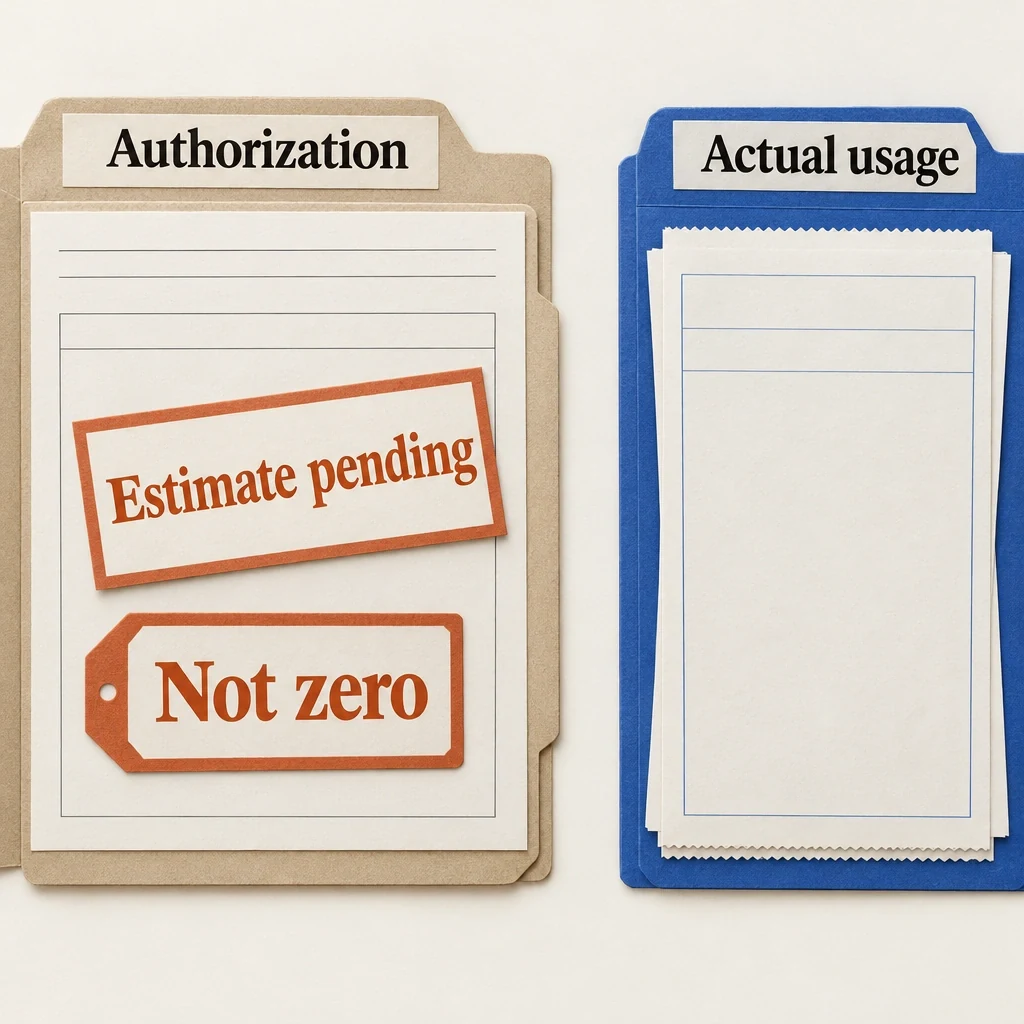
An empty financial field means pending
The blank estimate awaits a current source. Keep the approved scope separate from the later record of actual charges.
View full-size (opens in a new tab)Image explanation
- A blank financial field means the estimate is pending. It cannot be read as zero cost.
- Connect the production question, requested exports, changing and protected elements, current estimate, correction headroom and decision capacity in the scope sheet. Keep dated authorization amendments separate from actual charged usage and confirmed adjustments.
- The blank folders show proposed team paperwork. They contain no amounts, exchange rate, quota or signed approval, and imply no Fablo quote, billing ledger, enforced account limit or completed run.
Worked scope: one body, two new openings
This illustrative commission has no Fablo quote or completed run behind it.
The team selects a fictional cable-keeper demonstration body and asks for two entrances: a direct product detail and a loose cable at the desk edge. Both must preserve the demonstration, approved product facts, closing line, fictional-demo label, and Fablo invitation. The target delivery is the base plus two assembled variants in 9:16.
The sheet defers new languages, presenter changes, other ratios, and a new product ending. It requests an estimate for the two openings, their integration, and stated checks, with correction headroom listed separately.
The reviewer can authorize one focused correction round within the spending ceiling. Define the work in that round; further regeneration needs its own authorization even if candidates still need correction. If an opening needs a new demonstration to make sense, pause and propose a separate concept commission.
Leave financial amounts pending until the current estimate and billing treatment are available. Three exports are the requested outcome; the allowance still needs confirmation.
Separate media planning from the complete budget
Ask which operations the media quote covers: reference preparation, clips, audio, checks, retries, assembly, and export. Record charged reasoning or chat usage separately and confirm whether it's included in the quoted amount.
The sheet's ceiling records what you've authorized. Confirm which limit the product enforces and what it covers. If reasoning or other work is charged separately, a media limit won't cap those charges.
For Fablo, check the current offer, account estimate, and Terms, and resolve billing questions before approval. Keep credit amounts and monetary expenses in separate fields. Dividing the purchase price by a displayed credit balance won't necessarily give a valid conversion rate for this project's usage.
Record the billing outcome of failed operations, adding adjustments only when confirmed. Distinguish an operation that returned nothing from a completed scene that needs creative correction; they call for different decisions.
Preserve a useful packet when the scope must shrink
If the authorization won't cover the proposed work, remove optional branches first: an extra style, delivery ratio, or opening. Keep the product explanation, accurate offer, readable captions, and final inspection the selected deliverables need.
At a pause condition, compare completed work with the remaining scope. Accept the usable subset, authorize specific further work, or stop. Keep previews awaiting correction out of the accepted set, even when the allowance is used up.
After delivery, calculate cost per accepted ad from the complete usage record and use it to scope the next packet. Bring this sheet and your approved base material when you open Fablo to produce the selected variations. Fablo's monthly plans provide recurring credits; the number of finished ads depends on the work commissioned. Authorize the current estimate for this packet, including separately charged reasoning and correction headroom.

Prune branches, keep the trunk
When scope shrinks, start with optional branches. The selected deliverables still need a clear product explanation, accurate wording and review.
View full-size (opens in a new tab)Image explanation
- Remove optional styles, formats or openings when the scope must shrink.
- Keep the chosen deliverables' product explanation, accurate wording and final review. Reaching the authorized limit cannot turn a preview into an accepted file.