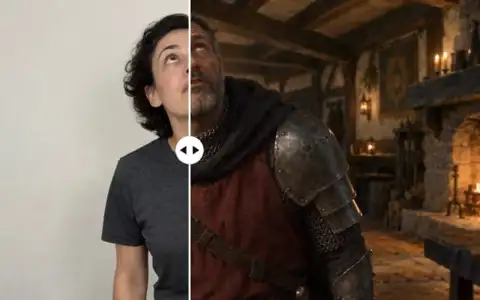
Use the references to choose a visual direction, then add your own facts, assets and audience. Bring these materials into the conversation:
- Source performance clip
- Character reference sheets
- Voice choices
A production approach to explore
- Analyze framing, gestures and facial motion
- Build a sheet for each role
- Replace the body and face appearance
- Create voice versions that preserve timing
- Match mouth movements to the voice where needed
- Compare the source and each character
Define what you want to make
Use this as a starting point for the production plan. Choose the final format and scope with Fablo before the paid work starts.
- Recast clips
- Source and recast clips shown together
- Performance preservation notes
Review the result against the idea
Use the brief to check the creative decisions. For this direction, pay attention to:
- Gestures and eye lines remain intentional
- Speech timing matches the original
- The character stays recognizable throughout the motion
- Voice and mouth remain aligned
Make the brief yours
Copy this into your production conversation. Replace the bracketed inputs with your own material, specify what you need delivered and ask for a media estimate.
Turn this performance into two mascot characters while preserving its gestures and timing. Give each a different voice and show source/output comparisons.

My idea, product, or brand: [describe it]
Audience and purpose: [who it is for and what it should communicate]
Facts, offer, and destination: [supply the exact details; flag anything unresolved]
Source performance clip: [attach or describe]
Character reference sheets: [attach or describe]
Voice choices: [attach or describe]
Format, runtime, and export: [set the delivery you need]
Media budget: [set a limit and ask for an estimate before production]

Requested deliverables:
- Recast clips
- Source and recast clips shown together
- Performance preservation notes

Creative review priorities:
- Gestures and eye lines remain intentional
- Speech timing matches the original
- The character stays recognizable throughout the motion
- Voice and mouth remain aligned

Use the references for direction. Make the story, wording, and brand treatment original.
Where the idea comes from
The source examples and reproduction methods informed this proposed workflow. Credits identify the source of each reference, and the brief describes a possible Fablo production.
Source workflow documentation